
Community

I participated in my first bike ride this past Saturday: The Tour de Nash in the 30-mile division. We started at Vanderbilt and wound 30 miles through downtown and East Nashville, ending where we started. I’d never ridden more than 15 miles and that was over fairly flat terrain, so I knew this was going to be a challenge. But I wanted to try.
It was exciting to see all the bikes at the start and I saw others wearing the same “HCA bike team” shirt. They were riding with other groups or spouses so I went up to the start line alone.
I was amazed at how friendly strangers were for the entire three-hour ride. When I was walking my bike up a hill at the 20-mile mark, one lady said, “Are you okay? Do you need some water?”
“No, I’m fine! I just ran out of gears, but thanks! I have plenty of water.”
At mile marker 27 I pulled over and leaped off my bike to walk out the cramp I’d developed in my right knee. Two gentlemen pulled up beside me, “Are you okay? Are you going to make it? We only have a little over 2 miles left.”
“Yes, I’m okay. Just a cramp in my knee; I’m walking it out. Thank you.”
Previously, I’d ridden in my neighborhood, and when I got tired, I stopped. I could plan my ride and decide how far I’d go, without any help from anyone. But this 30-mile ride was different. I’d never ridden in hills before, and never ridden 30 miles. But my biking community encouraged me when I faced the hills and the torture of burning hamstrings. They wouldn’t let me quit, but offered to care for me when I encountered difficulties.
Just like my new bike community encourages my physical fitness, my church community encourages me when I face hills in my spiritual and emotional life. They are my constant companions who allow me to travel more miles and overcome more hills in my life than I ever thought possible.
My new biking community inspires my physical health. My church community inspires my spiritual and emotional health. I need both.
Blessings,
Agatha
(click below for MP3 file)
Faith Inferiority

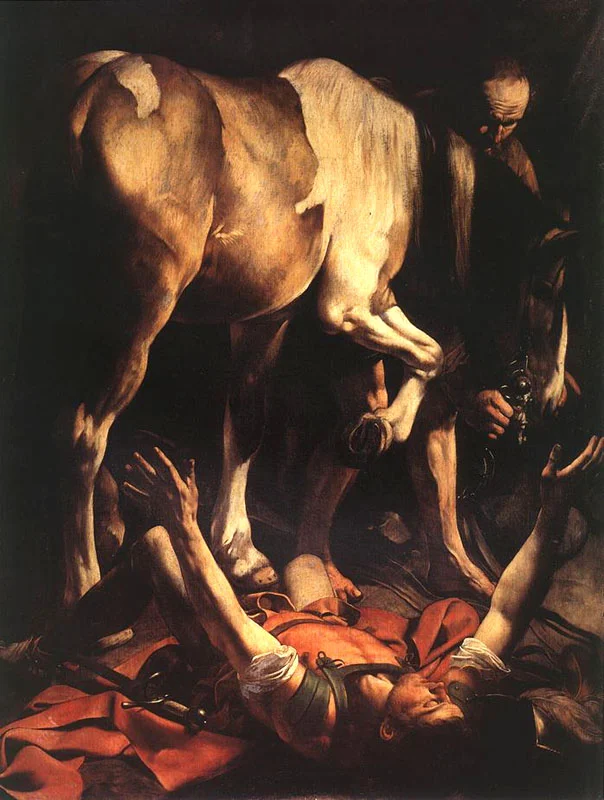
The Rev. Malone Gilliam preached yesterday on the New Testament reading from Acts 9:1-20 for the Third Sunday of Easter. It’s the story of how Jesus visited Saul and asked him, “Why do you persecute me?” The light from heaven caused Saul to lose his vision for three days. Jesus sent a messenger, Ananias to restore Saul’s sight and Saul was transformed, no longer persecuting Christians, but instead immediately proclaiming Jesus in the synagogues. We know the converted Saul as the great disciple, “Paul”.
Malone shared that his faith story wasn’t nearly as dramatic; he grew up going to church each Sunday and reading the Bible throughout the week. I grew up in a different denomination, but I also went to church each Sunday; I can’t remember a time when I didn’t consider myself a Christian.
Malone continued that we can develop a “faith inferiority complex” when our story isn’t as dramatic as the one we read about Paul. Certainly losing your sight for three days and having it restored by a healing stranger is pretty dramatic and we may think our conversion doesn’t “measure up”.
It’s important to note the drama of what happened to Saul was important because it was NOT typical of how people usually became converts. Flannery O’Connor writes, “I reckon the Lord knew that the only way to make a Christian out of that one was to knock him off his horse.” But O’Connor goes on to point out that the main character in the story isn’t Paul; it’s God. Saul’s conversion was not something he decided to do on his own; it was God’s doing.
This passage in Acts rests in a series of conversion stories involving Samaritans and an Ethiopian. Following the story about Paul, Luke goes on to write about the conversion of a Roman centurion. When all are read together, it is more obvious that God touches the lives of unlikely people from diverse backgrounds in a variety of ways, but all for one purpose: to spread the Gospel to the ends of the Earth. There is no one religious experience that fits all.
In Confirmation Class this Spring, we’ve had people share a brief story about their faith each Sunday. It is amazing that no two stories are the same. William Muehl commented, “The roads to Christian faith are as varied as the people who profess it.”
Let’s pray that God gives us the ability to see Him through our own story and that we are bold enough to share our story with others.
Blessings, my friend,
Agatha
(click below for MP3 file)
Discerning Thomas
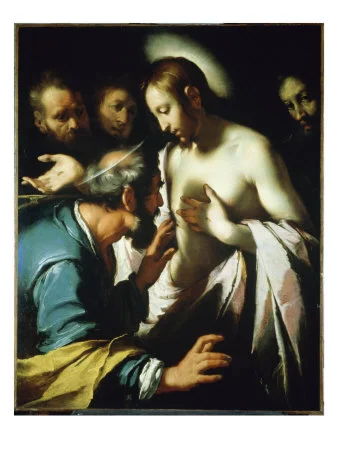
The Rev. Chris Bowhay started his sermon this past Sunday saying that Thomas gets a bad rap as a “doubter”.
“Why do people doubt miracles like a risen Christ?” Chris asked. He told a story of a woman in the 70’s who’d gotten caught up in a life of drugs and the debauchery of the times. But through grace she wanted to change. Her therapist asked, “How did you get mixed up in the lifestyle to begin with?” “That’s an easy answer,” she replied, “I believed in the lies because I wanted to.”
Chris said, “the problem in today’s world isn’t so much that people doubt something, but instead that they believe in everything. We believe in lies because we want to.”
Chris suggested that we ask ourselves, “What do we want to believe in?” or “Why do we doubt?” or even more to the point, “What has happened to us that makes us doubt God?”
It was Thomas who was the bold one. When Jesus announced that He was going back to Jerusalem, the other disciples protested, reminding Jesus that Jerusalem was where he was almost stoned. Why would he want to go back there and face the wrath of the crowds?”
But it was Thomas who said, “Let’s go with Him, so that we may die with Him.” (John 11:16). Thomas loved Jesus so much that he did not want to survive his savior! These are certainly not the words of a weak follower of Christ!
Rev. Bowhay continued, “A cynic is a disappointed idealist who refuses to believe anything is true.”
Instead of asking Thomas to give up his unbelief, Jesus was really asking Thomas to give up his despair over losing Jesus in the crucifixion. It wasn’t that Thomas didn’t want to believe that Christ had risen, but Thomas was disappointed that all their dreams and desires hadn’t come to pass. There wasn’t going to be a new kingdom of riches with Jesus as the king. Instead his King had died.
But here was Jesus, asking Thomas to get over his grief and despair at all the disappointments that life had brought him, offering instead a new life of love and wonder, and asking Thomas to believe in Him again.
If we want to love again, we have to let Jesus take away our despair over disappointments in our life over failed relationships, crushing addictions, betrayals by family and friends and failing bodies. It is only when we can believe in Him again that we can love again.
It is up to us to show the world the wounds in the palms of our hands, let others examine the wounds and then demonstrate how our wounds have been transformed into badges of glory.
When we let Christ love us again, we will be like Thomas, proclaiming, “My Lord and my God!”
Believe that Christ is risen today and He will take away your despair in disappointment and replace them with His love.
Blessings,
Agatha
Discerning Thomas- (click below for MP3 file)