Close Friendship
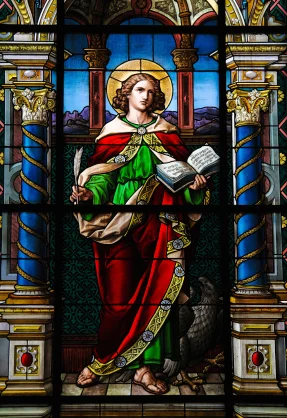
I’ll be closely studying the Gospel of John, his letters and the Book of Revelation for the next six months as I reflect on the teachings of the Rule of the Society of Saint John the Evangelist. Each week I’ll be studying two chapters of the Rule and reading Scripture verses that show the close friendship that Jesus had with the disciple John.

“A Rule of Life is a covenant that we enter into with God and ourselves. This rule is not a law to follow, but a pattern of practice and discipline that helps us commit ourselves to living a full and balanced life, as well as a measure to help us gauge our progress.”
I’ve studied Scripture for over 45 years and there are still verses and stories that I don’t understand. I’m hopeful that reflecting on this Rule will show me how to live a “full and balanced” life. I want to stop just reading about it and fully experience a life molded in Jesus Christ.
In each chapter, I’ll be looking for a few words or phrases that are particularly meaningful to me and I’ll share them with you here.
Chapter Two is titled: Our Dedication to the Disciple Whom Jesus Loved
These are the passages that are particularly meaningful to me:
“The image of the trusted friend lying close to the breast of Jesus is an icon of the relationship we enjoy with the Son of God through prayer. It is by being close to him that we are reunited with the Father, for Jesus is “God the only Son, who is close to the Father’s heart.”
“Love will open our eyes to the Spirit’s power in the sacraments, in prayer, in action and service.”
“Love will make us men of faith who know God’s power to bring life out of death. The beloved disciple recognized the Lord in the stranger by the shore. Love will expand our ability to know him in all persons, in all things, and in all places.”
May your eyes be open to the Spirit’s power.
Blessings,
Agatha
(Click below for MP3 file)

Grace and Politics

An interesting question started the discussion with a friend: “With the recent election of Mark Sanford to a Congressional seat in South Carolina, how much time has to elapse before a politician caught in a sex scandal can receive grace from the voters? Some politicians never see the light of day, where others recover fairly quickly. Sanford’s fall from grace was in 2009 and recently he’s been accused of violating his divorce decree, yet he gets elected again. Is 4 years enough time for grace to kick-in for politicians?
Needless to say it was an enlightening conversation as we explored “grace.”
Phil Yancey writes in What’s so Amazing About Grace? “Grace does not excuse wrong, but it treasures the wrongdoer. True grace is shocking, scandalous. It shakes our conventions with insistence on getting close to evil and touching it with mercy and hope. It forgives the unfaithful spouse, the racist, the child abuser. It loves today’s AIDS-ridden addict as much as the tax collector of Jesus’ day.”
It is comforting that grace emanates from God as a free gift: "...by grace are ye saved through faith; and that not of yourselves: it is the gift of God. " (Ephesians 2:8). Grace is God's unmerited favor and represents His goodness toward those who have no claim on, nor reason to expect, divine favor.
We can’t earn grace and there is nothing we can do that can take it away. God offers grace as his free gift to us, over and over again.
The conversation with my friend returned to grace and politics. I commented that I believe that grace is a spiritual condition and it wasn’t grace that got Sanford elected. As judgmental humans it is almost impossible for us to fully impart grace to others. We can try very hard to forgive and reconcile, but we usually expect that our forgiveness will be earned only through repentance and transformation.
Although God has given Mark Sanford grace, it wasn’t because he deserved it or earned it. It was the same gift of unlimited grace that God gives freely to us. As humans the voters measure their support with different yardsticks. Can he raise campaign money? Can he help other candidates? Does he still have the ability to influence powerful people in the political process? It’s not about grace, it’s about influence in the voters’ minds.
It’s hard to predict in politics if a politician can ever recover from a fall from grace; they are at the mercy of voter fickleness. It’s comforting to know that God doesn’t play favorites, never measuring our worth by how many people we know or how much influence we have. Instead everyone receives God’s grace without even asking, even fallen politicians.
May you rest in God’s grace today.
Blessings,
Agatha
(Click below for MP3 file)

Evil

This week, “evil” has been suggested as the cause of the Boston Marathon bombings. There were many sermons yesterday throughout the country calling for forgiveness with Cardinal Sean P. O’Malley preaching at a packed Mass at the Cathedral of the Holy Cross in Boston, “Forgiveness does not mean that we do not realize the heinousness of the crime,” he told reporters afterward. “But, in our hearts, when we are unable to forgive, we make ourselves a victim of our own hatred.”
In his book, The Art of Forgiveness, Lewis Smedes, says, “When we forgive evil we do not excuse it, we do not tolerate it, we do not smother it. We look the evil full in the face, call it what it is, let its horror shock and stun and enrage us, and only then do we forgive it.”
I’ve just finished an interesting book by John A. Sanford, Evil: The Shadow Side of Reality.
Sanford states: “…there is an inevitable dark side to our nature that refuses to be assimilated into our lofty ideals of goodness, morality, and ideal human behavior…If we go beyond the bounds of our natural capacity for love and kindness, we build up an opposing amount of anger and cruelty within us.”
“Moreover, if we strive to be only good and perfect, we become hateful, for too much of the vital energy within us is being denied…the important thing is that we recognize the Shadow side of ourselves. This recognition alone produces a powerful and beneficial change in consciousness. For one thing, it greatly aids our humility, our sense of humor, and our capacity to be less judgmental of others. The Shadow cannot be denied, but must be dealt with in the light of a higher authority.”
The Rev. Malone Gilliam commented in yesterday’s sermon at The Table at St. George’s Episcopal Church in Nashville, “There is a huge gap between our human capacity to forgive and God’s capacity. If we acknowledge that God forgives all sinners, no one is exempt. The problem becomes that if we draw the line between those forgiven and those not forgiven, we may find ourselves, or our loved ones, on the wrong side of the line. It is only because of the power of our Savior Jesus Christ that we can ever hope to close that gap. It is only because God has forgiven us and sent His Son to us that we can forgive the unimaginable, too.”
As a nation, we will wrestle with this need to forgive for a long time.
Blessings, my friend,
Agatha
April 2013
(click below for an MP3 file)
Faith Inferiority

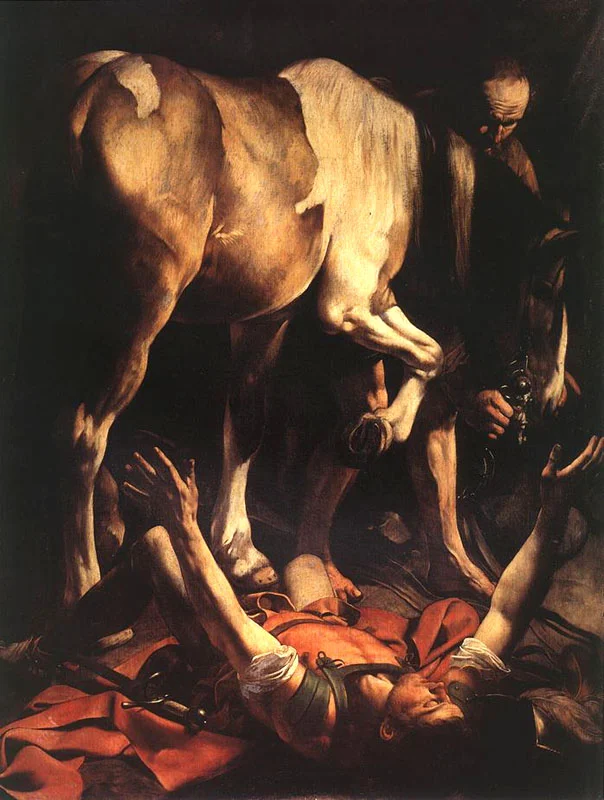
The Rev. Malone Gilliam preached yesterday on the New Testament reading from Acts 9:1-20 for the Third Sunday of Easter. It’s the story of how Jesus visited Saul and asked him, “Why do you persecute me?” The light from heaven caused Saul to lose his vision for three days. Jesus sent a messenger, Ananias to restore Saul’s sight and Saul was transformed, no longer persecuting Christians, but instead immediately proclaiming Jesus in the synagogues. We know the converted Saul as the great disciple, “Paul”.
Malone shared that his faith story wasn’t nearly as dramatic; he grew up going to church each Sunday and reading the Bible throughout the week. I grew up in a different denomination, but I also went to church each Sunday; I can’t remember a time when I didn’t consider myself a Christian.
Malone continued that we can develop a “faith inferiority complex” when our story isn’t as dramatic as the one we read about Paul. Certainly losing your sight for three days and having it restored by a healing stranger is pretty dramatic and we may think our conversion doesn’t “measure up”.
It’s important to note the drama of what happened to Saul was important because it was NOT typical of how people usually became converts. Flannery O’Connor writes, “I reckon the Lord knew that the only way to make a Christian out of that one was to knock him off his horse.” But O’Connor goes on to point out that the main character in the story isn’t Paul; it’s God. Saul’s conversion was not something he decided to do on his own; it was God’s doing.
This passage in Acts rests in a series of conversion stories involving Samaritans and an Ethiopian. Following the story about Paul, Luke goes on to write about the conversion of a Roman centurion. When all are read together, it is more obvious that God touches the lives of unlikely people from diverse backgrounds in a variety of ways, but all for one purpose: to spread the Gospel to the ends of the Earth. There is no one religious experience that fits all.
In Confirmation Class this Spring, we’ve had people share a brief story about their faith each Sunday. It is amazing that no two stories are the same. William Muehl commented, “The roads to Christian faith are as varied as the people who profess it.”
Let’s pray that God gives us the ability to see Him through our own story and that we are bold enough to share our story with others.
Blessings, my friend,
Agatha
(click below for MP3 file)
Discerning Thomas
The Rev. Chris Bowhay started his sermon this past Sunday saying that Thomas gets a bad rap as a “doubter”.
“Why do people doubt miracles like a risen Christ?” Chris asked. He told a story of a woman in the 70’s who’d gotten caught up in a life of drugs and the debauchery of the times. But through grace she wanted to change. Her therapist asked, “How did you get mixed up in the lifestyle to begin with?” “That’s an easy answer,” she replied, “I believed in the lies because I wanted to.”
Chris said, “the problem in today’s world isn’t so much that people doubt something, but instead that they believe in everything. We believe in lies because we want to.”
Chris suggested that we ask ourselves, “What do we want to believe in?” or “Why do we doubt?” or even more to the point, “What has happened to us that makes us doubt God?”
It was Thomas who was the bold one. When Jesus announced that He was going back to Jerusalem, the other disciples protested, reminding Jesus that Jerusalem was where he was almost stoned. Why would he want to go back there and face the wrath of the crowds?”
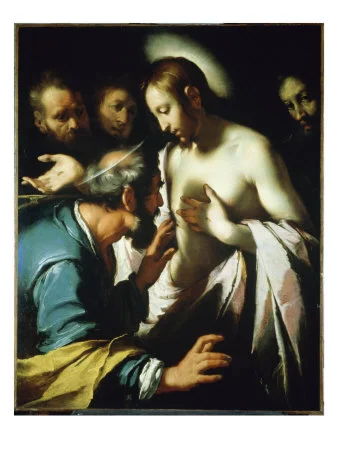
But it was Thomas who said, “Let’s go with Him, so that we may die with Him.” (John 11:16). Thomas loved Jesus so much that he did not want to survive his savior! These are certainly not the words of a weak follower of Christ!
Rev. Bowhay continued, “A cynic is a disappointed idealist who refuses to believe anything is true.”
Instead of asking Thomas to give up his unbelief, Jesus was really asking Thomas to give up his despair over losing Jesus in the crucifixion. It wasn’t that Thomas didn’t want to believe that Christ had risen, but Thomas was disappointed that all their dreams and desires hadn’t come to pass. There wasn’t going to be a new kingdom of riches with Jesus as the king. Instead his King had died.
But here was Jesus, asking Thomas to get over his grief and despair at all the disappointments that life had brought him, offering instead a new life of love and wonder, and asking Thomas to believe in Him again.
If we want to love again, we have to let Jesus take away our despair over disappointments in our life over failed relationships, crushing addictions, betrayals by family and friends and failing bodies. It is only when we can believe in Him again that we can love again.
It is up to us to show the world the wounds in the palms of our hands, let others examine the wounds and then demonstrate how our wounds have been transformed into badges of glory.
When we let Christ love us again, we will be like Thomas, proclaiming, “My Lord and my God!”
Believe that Christ is risen today and He will take away your despair in disappointment and replace them with His love.
Blessings,
Agatha
Discerning Thomas- (click below for MP3 file)